
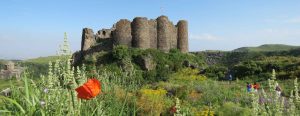
Armenia, land of legends
Armenia is not an easy country to reach. There are few direct flights, and two of its four borders remain closed. Perhaps the most extraordinary thing about Armenia is that it exists at all. Wedged between Turkey, Iran, Georgia and Azerbaijan, this small, landlocked nation, roughly the size of Belgium, has survived invasion, division and genocide to remain one of the world’s oldest continuous civilisations. Its iconic peak, Mount Ararat, now sits just across the Turkish border, visible from Yerevan’s Victory Park but forever out of reach: a fitting emblem for a country that has spent centuries holding on to what is its own.
Armenia’s ancient monasteries and a nation of firsts
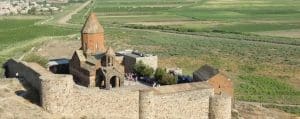
In 301 AD, Armenia became the world’s first nation to adopt Christianity, and its churches carry that history rather than merely commemorate it. Echmiadzin, sometimes called the Armenian Vatican, is among the oldest cathedrals on earth. Geghard, partly carved into the cliffs, remains a sublime setting for the medieval devotion it was built for, its acoustics as remarkable as its architecture. Khachkars, or cross-stones, mark cemeteries and monastery walls across the country, some dating back a thousand years. At Khor Virap, in the shadow of Ararat itself, you can climb down into the dungeon where Gregory the Illuminator was imprisoned for thirteen years, before converting the Armenian king, and with him, the nation.
Lake Sevan, Garni Gorge and the mountains of Armenia
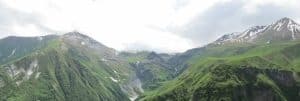
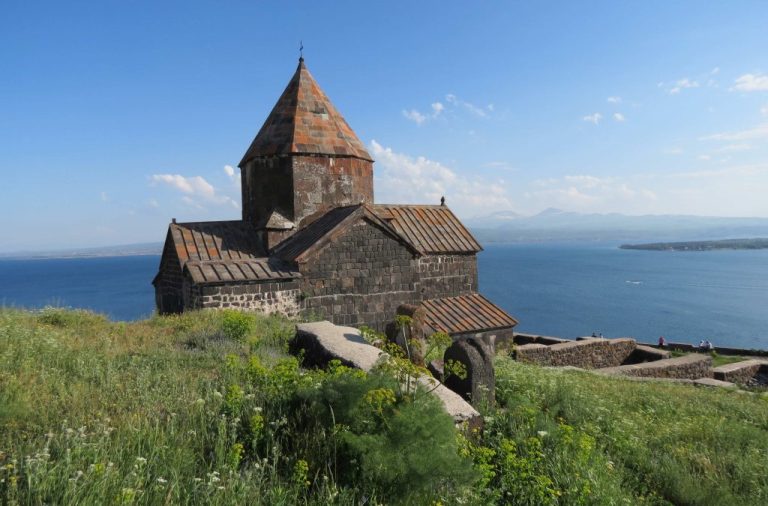
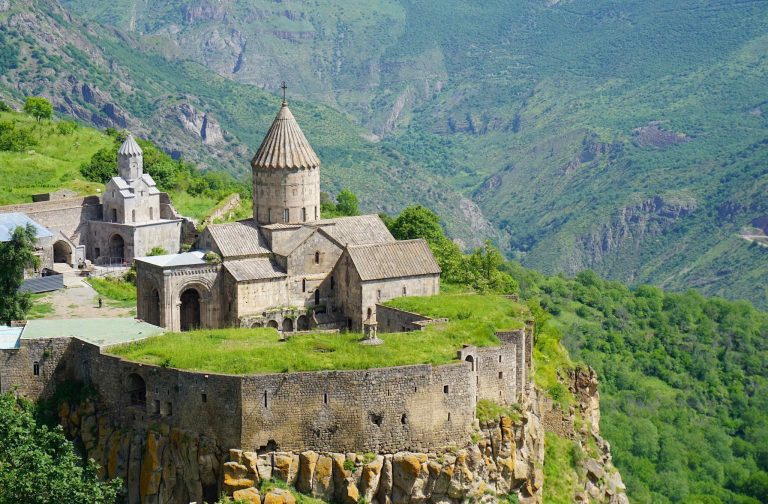
Beyond its monasteries, Armenia is a country of dramatic landscape. Armenians call Lake Sevan, the highest freshwater lake in the Caucasus, their pearl, and its island monastery of Sevanavank has watched over its waters since the ninth century. At Garni, a first-century pagan temple gives way to a gorge of basalt columns known locally as the Symphony of Stones. Further south, the monastery of Tatev is reached by cable car across the Vorotan gorge, one of the longest cableways in the world, with majestic views the whole way across. Noravank, meanwhile, clings to a cliff of red rock so improbable it is hard to believe it was built at all.
The food, wine and music of Armenia
Armenia claims the world’s oldest known winery, a cave at Areni where wine has been made for six thousand years, and the country’s heady ARARAT brandy has been distilled in the same valley since 1887. Lavash, the traditional flatbread baked in underground clay ovens, is recognised by UNESCO as part of humanity’s cultural heritage, and the haunting sound of the duduk, carved from apricot wood, accompanies everything from weddings to solemn commemorations. Add carpet weaving, the ancient observatory at Karahunj, and a national love of chess, compulsory in every Armenian school, and it becomes a country as rich in culture as it is in history.
The best small group tours of Armenia
Travelling alone, you can only scratch the surface. Travelling with us, on one of our expert-led small group tours, gives you the chance to properly get under the skin of a country that rewards patience and curiosity in equal measure: its history, its faith and its extraordinary hospitality, guided by the thoughtful knowledge and anecdotes only local experts can offer. Small enough to feel personal, expert enough to go far beyond the obvious: that is how we like our guests to experience an unforgettable Armenia.
All our Armenia tours
Why not Subscribe to our Newsletter?
Be the first to hear of special offers and new tours. New subscribers get a £50 discount on their first Esplora Travel tour
You can update your preferences or unsubscribe at any time. We do not share email addresses with third parties.