Planning a Trip to Sicily: What You Need to Know Before You Go
How long has Esplora Travel been running tours in Sicily?
Esplora Travel has been running small group tours in Sicily since 2010. Over that time, the company has built up a considerable amount of experience and a network of contacts across the island, from restaurant owners to hoteliers to local guides. This article draws on that experience to help anyone planning their own trip to Sicily, whether or not they end up travelling with Esplora.
How many days do you need for a trip to Sicily?
Sicily is the largest island in the Mediterranean, and it is large not just geographically but historically. Few places in the Mediterranean, aside perhaps from Rome or Istanbul, pack more history into a comparatively small area. It is worth taking the time to get to know the island properly. Of course, how long to stay depends on what the trip is for: a weekend by the pool or a catch-up with old friends is a different kind of holiday altogether. But for anyone hoping to get beneath the surface of Sicily’s history, a week is rarely enough. A city like Palermo, Catania or Syracuse could easily fill a week on its own, but that still would not scratch the surface of the island as a whole. Twelve days is generally the practical minimum, and even that assumes the logistics are well planned, with no days lost simply moving between places. Itinerary planning matters in Sicily: where to base accommodation and how to get between locations, not least because opening times can be unpredictable. Most museums, for instance, close on Mondays, so that needs factoring in from the start.
Is it worth hiring a car in Sicily?
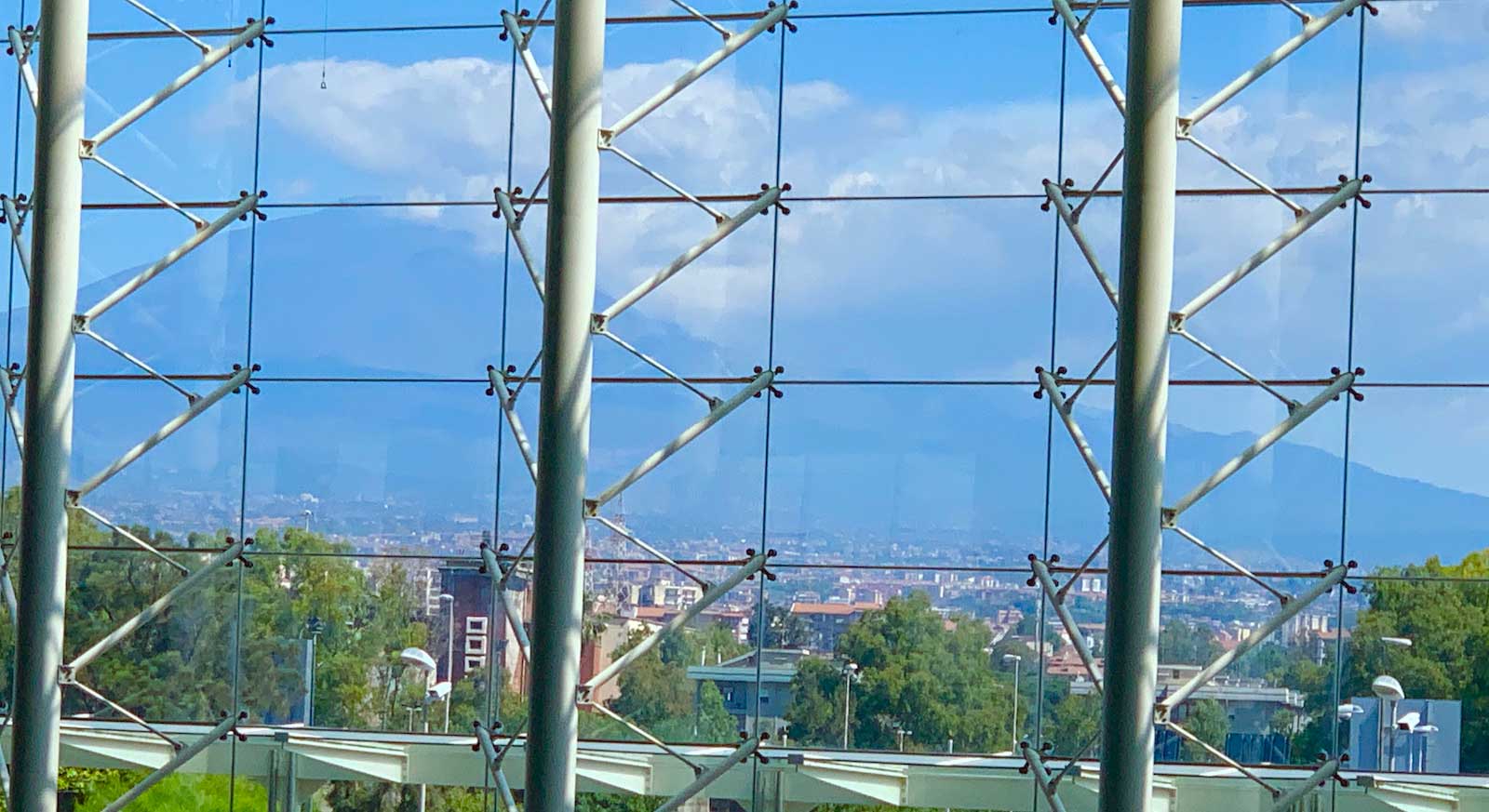
Hiring a car is a good solution, provided the driver holds a valid licence and is comfortable driving on Sicilian roads. Despite its reputation, driving in Sicily is not nearly as alarming as people expect. Sicilian drivers are, on the whole, skilled and alert. Driving between towns is genuinely enjoyable: the landscape is superb, and setting out from Catania on a late spring afternoon towards Mount Etna is one of the pleasures of a Sicilian road trip.
What are the difficulties of driving in Sicily?
Google Maps has real limitations in Sicily. It is not always reliable at distinguishing a narrow alleyway or a flight of steps from an actual driveable road, and following it blindly can leave a driver stuck in difficult situations. City centres, and even small towns, often have restricted traffic zones (known locally as a ZTL), where access is limited to residents or to certain times of day, marked by a sign that is easy to miss. Driving through one without noticing results in a fine, captured by camera. Any fine incurred should be paid promptly. Ignoring it will not make it disappear into Italian bureaucracy, and unpaid fines can cause problems the next time a car is hired on a return visit.
How reliable are Google Maps journey times in Sicily?
A useful rule of thumb is not to trust Google Maps’ timings between Sicilian cities at face value. Adding at least 50% to any estimate is wise: if the app suggests three hours from one point to Palermo airport, it is safer to allow four, since traffic around the cities can be heavy.
Can you drive right up to your hotel in Sicily?
In several Sicilian towns, driving into the historic centre simply is not possible. Anyone booked into accommodation in the middle of Ortigia in Syracuse, for example, will need to park outside and trolley their luggage the rest of the way, which is not the most enjoyable task after 11pm following a long journey. This is worth factoring in before booking accommodation, not after.
Is public transport good in Sicily?
Public transport in Sicily is, despite its reputation, genuinely good, though it is largely limited to routes between the main cities. The train between Palermo and Messina, for instance, costs around €15 for a two-and-a-half-hour journey and is comfortable and reliable. Once travel moves away from the main cities, though, trains become far more restrictive. Buses fill some of the gaps and are excellent value, but bus travel comes with its own planning demands: services are severely reduced on Sundays and public holidays, which are not always obvious dates to keep in mind, and different routes are often run by different companies, each with their own timetable to track down. Travelling by public transport also means meeting Sicilians along the way, something that gets lost when every journey is planned silently through a phone. Sicilians are, as a rule, happy to help with directions, and often strike up conversation without even being asked.
How much time should you budget for getting around by public transport?
Using public transport well means budgeting real time for it. Arriving at a station is only the first step: there is still the journey from the station to a hotel, a museum, or wherever the day’s plans are heading, and that additional time needs to be built into the schedule.
Should you use a private driver or taxi to get around Sicily?
Private drivers and taxis are a very expensive way of covering ground in Sicily and are best avoided where possible. The more effective approach is to plan flight arrival times carefully. Landing at Catania airport at 9pm and expecting to reach somewhere like Cefalù or Agrigento the same night is not realistic. Flights should be booked to arrive early enough in the day to allow for an onward connection; otherwise, the only option left is a private transfer, which can cost €250 to €300.
Can you get around Sicily by hitchhiking or scooter?
Hitchhiking works reasonably well in parts of Sicily, particularly around the Madonie Mountains, although it is not permitted on motorways and is obviously impractical with luggage in tow. Scooters are sometimes requested by travellers wanting to explore independently, but Sicily is simply too large an island to cover this way.
What are the alternatives for getting around Sicily for people who don’t want to hire a car or rely on public transport?
This is one of the reasons a small group tour works well: travel and transport between hotels are planned in advance, and all the logistics are handled.
Where is the best place to base yourself in Sicily?
First of all, it is important to note that no single base or hotel allows access to the whole of Sicily; journey times between regions are simply too long for that to work.
Taormina and Ortigia are the two places most visitors want to base themselves, and it is easy to see why: they are among the most attractive spots on the island. But they also come with the biggest logistical demands, and in Taormina’s case, the highest price tag. A week based entirely in Taormina would be lovely but expensive, and it comes with the added drawback of constantly travelling out to see other sights and back again. Neither town allows easy access by car right up to the accommodation, so visitors typically end up parking outside and walking the final stretch, which is not ideal after a long, hot day of driving. Where to base a trip needs thinking through from the very start.
Is it worth staying in the Sicilian countryside?
Staying out in the Sicilian countryside, particularly in one of the island’s agriturismi, is a genuinely lovely experience, and spending a night or two in one during a Sicily itinerary is worth building in. The trade-off is that most agriturismi expect guests to eat on-site each evening, which can mean the same menu on repeat, or a drive into town for dinner, followed by the question of whether it is wise to drive back after a glass or two of wine.
How do you keep valuables safe while travelling around Sicily?
Valuables such as money, jewellery, or a laptop should never be left in an unattended car. This is straightforward to manage when staying overnight in a hotel with a safe, but becomes trickier when moving between accommodations, when there is no choice but to carry things along. Carrying a laptop around the temples at Agrigento, for instance, is not especially practical. In cases like this, it can be worth planning an overnight stop nearby, so valuables can be left safely in a hotel while the temples are visited at leisure.
What are the social benefits of travelling in a small group?
Beyond the practical logistics, there is a social dimension to travelling with others. Sitting down over dinner to share reflections on the day helps reinforce the experience of a place, turning a trip through the island into something that becomes a lasting memory, which is, in the end, much of the reason people travel at all.
What counts as a “small group” tour, really?
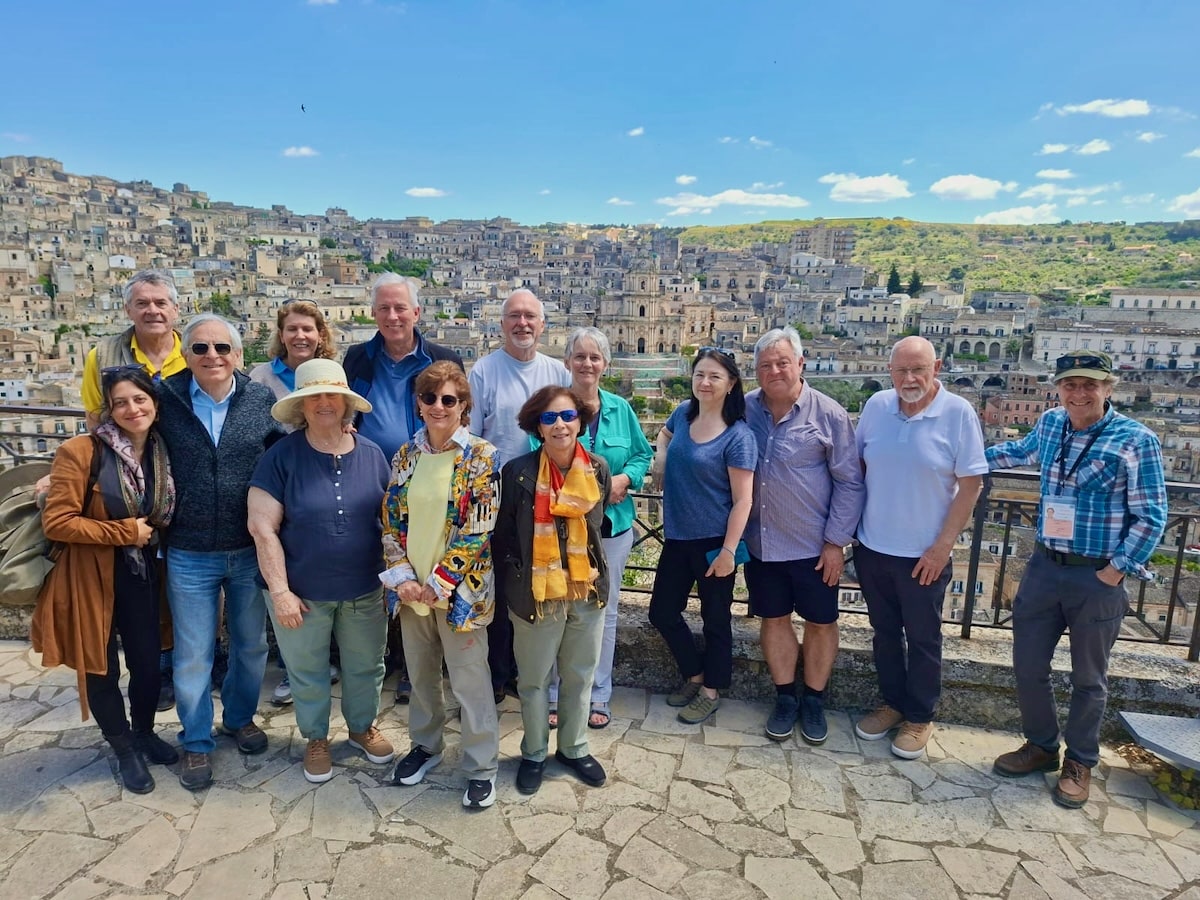
The term “small group” means different things to different tour operators. Many companies consider a group of up to 25 people to be small. Esplora’s maximum group size is 12 guests, travelling in a 19-seat minibus. The minibus size is not incidental: a 19-seater can navigate Sicily’s smaller towns in ways a 30- or 50-seater cannot, but it is deliberately not filled to capacity, leaving room for luggage and a bit of breathing space on board.
Why do smaller group sizes lead to better restaurants and food?
Group size affects the quality of dining as much as it affects transport. Many of the restaurants used are small, family-run places. A group of 25 leaves a restaurant with little option but to serve a standard tourist menu. A group of 12, by contrast, can be accommodated by restaurant owners known for fifteen years or more, who understand the dietary needs of the group, from gluten-free to vegetarian to fish allergies, and who can put together something closer to a home-cooked menu than a set tourist offering.
Why do smaller groups get better hotels in Sicily?
Hotel choice is another area shaped by group size. Sicily’s most characterful hotels are rarely purpose-built four-star properties on the edge of a city; they tend to be converted historic palazzi in the heart of a town, often with only a handful of rooms, sometimes as few as six to ten. Staying in places like this is only possible with a small group, and it brings other benefits too: proximity to the harbour, the best restaurants, and the places worth walking to in the evening, all of which a hotel on the outskirts simply cannot offer.
Do you need a guide to visit Sicily?
Search engines and AI tools can answer a great many factual questions about Sicily, but they cannot replicate what a local guide brings to a trip: context, personality, and a sense of humour that turns historical facts into something memorable. Hiring a guide independently is expensive, given the daily rates common in Sicily, but the cost becomes far more manageable when split across a group of twelve.
Is a small group tour of Sicily good value for money?
Small group tours have a reputation for being expensive, and travelling independently can certainly be cheaper on paper. But once the cost of a guide, transport, a driver, and the planning behind an itinerary are added together and divided across a group of twelve, the total often works out as good value. There is also a less visible saving: a well-planned itinerary avoids the wasted days that come from arriving at a museum only to find it closed, or discovering too late that a route does not work as expected.
Why book a small group tour of Sicily with Esplora Travel?
Esplora Travel has been running small group tours in Sicily for over fifteen years, drawing on that experience, its local connections, and people on the ground to help plan a trip that works. Pricing is fully inclusive, covering meals and drinks as well as accommodation, so there are no hidden extras. Evenings are spent in local restaurants rather than hotel dining rooms, and accommodation is chosen for character, historic palazzi and family-run hotels rather than anything resembling a motel.
Guides are genuine local experts, and a tour manager is on hand 24 hours a day. Travelling in a small group also brings access to places and people that larger groups simply cannot reach. Bookings are fully insured and comply with travel industry regulations, and Esplora takes its environmental responsibilities seriously too. Above all, guests are treated as guests and looked after individually, so that they come away having thoroughly enjoyed themselves.
If you’re looking for a place to start, our flagship Treasures of Sicily tour brings together many of the places covered in this guide: Siracusa, Agrigento, Palermo, Cefalù and Taormina, over twelve days with a guide who knows the island well.
And finally, what happens if something goes wrong on a Sicily holiday?
No one expects a holiday to go wrong, but things occasionally do: lost items, minor injuries, sudden illness. Travelling as part of a small group tour means having a tour manager on hand around the clock to help deal with whatever comes up, a layer of support that is harder to come by when travelling independently.
Latest posts & articles
When you travel with us, our aim is to give you the very best travel experience. We travel in small groups of like-minded people with expert local guides.